
Μαριοσκέπαστα αποκαλούνται τα νησιά του Αιγαίου. Σ’ όποιο νησί και να πας, θα βρεις εκκλησίες και μοναστήρια αφιερωμένα στην Παναγία. Σ’ Αυτήν προσεύχεται ο καπετάνιος στο τραγούδι του:
«Δεν κλαίω το καράβι, ούτε την συρμαγιά,
μον’ κλαίω τα ναυτάκια, που τά’χω διαλεκτά.
Βοήθα τα ναυτάκια Παναγιά μου,
να φτάσουν στην στεριά».
Στην Κάρπαθο, οκτώ από τις κεντρικές εκκλησίες των έντεκα χωριών της Καρπάθου είναι αφιερωμένες στην Παναγία: Коίμηση (Μενετές, Απέρι, Πυλές, Όλυμπος), Γέννηση (Βωλάδα, Μεσοχώρι), Ευαγγελισμός (Πηγάδια), Ζωοδόχος Πηγή (Διαφάνι). Υπάρχουν και δεκάδες εξωκκλήσια, που η προφορική τους παράδοση διέσωσε την άγραφη ιστορία της Καρπάθου.

Ο Σκλάβος
Πριν από τρεις – τέσσερες αιώνες, πειρατές, σε μια επιδρομή στην Κάρπαθο, έκλεψαν ένα επτάχρονο αγόρι, το μοναχοπαίδι μιας Μενεδιάτισσας, και το πούλησαν στα σκλαβοπάζαρα. Η πονεμένη μάνα απόθεσε τις ελπίδες της στην Παναγία, παρακαλώντας να της φέρει το παιδί της και για τριάντα χρόνια πήγαινε κάθε Σάββατο στην Αγία Κυριακή για ν’ ανάψει τα καντήλια.
Ένα απ’ αυτά τα Σάββατα, σαν έφτασε στην Αγία Κυριακή και άναψε τα καντήλια, άκουσε μια γυναικεία φωνή που της έλεγε να πάρει το μονοπάτι και να κατέβει τον γκρεμό πού ’χε νέα για το παιδί της. Μόλις κατέβηκε τον γκρεμό άκουσε πάλι τη φωνή που της έλεγε να πάει στον «Μεγάλο Σκίνο». Την ίδια ώρα έτυχε να περνά απ’ εκεί ο Βασιλής του Μανιά, που είχε ακούσει κι αυτός την ίδια φωνή και συνάντησε την Μενεδιάτισσα που έψαχνε για το σημείο που της είχε υποδειχθεί.
Ο Βασιλής, που ήξερε καλά την περιοχή, την οδήγησε στον «Μεγάλο Σκίνο» κι εκεί ψάχνοντας βρήκαν την εικόνα της Παναγίας. Έμειναν κι οι δυο άφωνοι μπροστά στο θαύμα και πριν ακόμη συνέλθουν από τη συγκίνηση, ένας άγνωστος ηλιοκαμμένος άντρας παρουσιάζεται μπροστά τους και ρωτά να μάθει ποιος δρόμος οδηγεί στις Μενετές.

Όταν οι πειρατές έκλεψαν το γιο της Μενεδιάτισσας τον πούλησαν σ’ ένα σκλαβοπάζαρο της Ανατολής, και όταν μεγάλωσε τον έβαλαν ναύτη στα καράβια. Το εφτάχρονο παιδί γνώριζε ότι καταγόταν από την Κάρπαθο και τις Μενετές, και κράτησε στο παιδικό του μυαλό μερικές εικόνες από τη ζωή του στο νησί. Πολλές φορές, όταν περνούσε από το Καρπάθιο Πέλαγος και αντίκριζε τα βουνά της Καρπάθου, η καρδιά του χτυπούσε δυνατά γιατί ήξερε πως κάπου εκεί ζούσαν οι δικοί του. Μετά από χρόνια, το καράβι μετέφερε ξυλεία στην Αίγυπτο και πέρασε πιο κοντά στην στεριά για να πιάσουν τα πανιά του τον αέρα που κατέβαινε από τα βουνά.
Δεν είχε ακόμη ξημερώσει όταν ο ναύτης αντίκρισε τα βουνά της Καρπάθου, πιο κοντά από κάθε άλλη φορά. Η καρδιά του χτυπούσε δυνατά και η επιθυμία του να βγει έξω στο νησί μεγάλωνε. Παρουσιάζεται τότε η οπτασία μιας γυναίκας που τον παρακινεί να πέσει στη θάλασσα και κολυμπώντας να βγει στη στεριά. Όμως εκείνος δείλιασε γιατί το καράβι περνούσε σε αρκετή απόσταση από τη στεριά. Πάλι η οπτασία εμφανίζεται και τον συμβουλεύει να ρίξει ένα από τα ξύλα στη θάλασσα και με τη βοήθεια του να φτάσει στην ακτή. Αυτή τη φορά δεν δίστασε, πέφτει στη θάλασσα και στηριγμένος πάνω στο ξύλο βλέπει το καράβι να απομακρύνεται σιγά-σιγά.
Είχε πια ξημερώσει όταν το καράβι χάθηκε μέσα στο πέλαγος, πίσω από τον ορίζοντα και ο σκλάβος κολυμπώντας έφτασε κατάκοπος στην ακτή. Ξεκουράστηκε λίγο και για περισσότερη ασφάλεια απομακρύνθηκε προς το εσωτερικό του νησιού, μέχρι τον «Μεγάλο Σκίνο», εκεί που συνάντησε τη Μενεδιάτισσα και τον Βασιλή του Μανιά. Στην ερώτηση για το δρόμο που πάει στις Μενετές, η Μενεδιάτισσα απάντησε ότι κι αυτή πήγαινε προς τα ’κει και αν ήθελε να την ακολουθήσει. Αλλά όταν έφτασαν στη Βαθά είχε πια σουρουπώσει και η Μενεδιάτισσα του πρότεινε να περάσει τη νύχτα στο στάβλο της και το πρωί να πάει στις Μενετές.

Μάνα και Γιος
Μαγείρεψε ό,τι πρόχειρο είχε και με το φως του λυχναριού δείπνησαν μάνα και γιος. Πριν ο ξένος πέσει να πλαγιάσει πάνω στο σοφά που τού ’στρωσε η Μενεδιάτισσα, είδε το εικόνισμα της Παναγίας πάνω στο ράφι με το καντήλι και κάτι ξεκαθάρισε μέσα στο θολωμένο του μυαλό. Από ένστικτο ή από κάποια παλιά συνήθεια έκαμε το σταυρό του κι έπεσε να κοιμηθεί.
Όμως ο ύπνος δεν έπαιρνε και τη Μενεδιάτισσα. Μέσα στο μυαλό της στριφογύριζε το εικόνισμα της Παναγίας στον σκίνο και βούιζε στ’ αυτιά της η φωνή που της έλεγε: «Έλα πούχω νέα για το παιδί σου». Μ’ αυτές τις σκέψεις πήγε κι έκατσε δίπλα στον κοιμισμένο άγνωστο, χωρίς να μπορεί να πάρει τη ματιά της από πάνω του. Ο λογισμός της πήγε πίσω στο παιδί της και σκέφτηκε ότι αν ζούσε ο γιος της θα ήταν κι αυτός στην ίδια ηλικία. Ξαφνικά σαν αστραπή πέρασε από το νου της η σκέψη μήπως κι ήταν τούτος ο άγνωστος ο γιος που περίμενε και της τον έφερε η Παναγία; Αλλά πάλι πλημμύρισε την καρδιά της η αμφιβολία: «Η Παναγία μου είπε ότι θα μού ’φερνε νέα για το γιό μου, όχι όμως και το ίδιο μου το παιδί».
Ίσως πάλι, σκέφτηκε, ο άγνωστος να είχε κάποιο νέο για το παιδί της γιατί εφαίνετο ότι ερχόταν από χώρες μακρυνές. Της ήλθε η επιθυμία να τον ξυπνήσει και να τον ρωτήσει, αλλά όταν είδε πόσο βαθειά κοιμόταν τον λυπήθηκε. Τριάντα χρόνια μαράθηκε η νιότη της να περιμένει, για μια ακόμη νύχτα θα ’κανε υπομονή. Μόλις τελείωσε αυτή την σκέψη ξανάρχισε από την αρχή και παίδευε το μυαλό της, μέχρι τις πρωινές ώρες που την πήρε ο ύπνος.

Έτσι δεν άκουσε το πρωινό λάλημα του πετεινού που ξύπνησε τον ξένο και την βρήκε να κοιμάται στα πόδια του. Εκείνος σηκώθηκε με προσοχή για να μη την ξυπνήσει, άνοιξε την πόρτα και βγήκε έξω. Το μυαλό του άρχισε και πάλι να ξεθολώνει και από ένστικτο πήγε στον απόπατο που ήταν καμιά εικοσαριά μέτρα πίσω από το στάβλο. Ξαναγύρισε και μπήκε μέσα στο φουρνόσπιτο πού ήταν δίπλα στο στάβλο. Όταν ήταν μικρός εκεί είχαν ένα μεγάλο κουβά που έβαζαν νερό για να ποτίσουν τα ζώα και για να πλένονται. Τώρα βρήκε τον κουβά άδειο, γιατί με τα συμβάντα της προηγούμενης μέρας, η Μενεδιάτισσα δεν βρήκε τον καιρό να πάει να φέρει νερό. Ο ξένος πήρε τον κουβά και από ένστικτο τράβηξε για τον Βρουτσά, εκεί που όταν ήταν μικρός πήγαινε με τη μάνα του για να φέρουν νερό από μια μικρή πηγή.
Στο μεταξύ, από τη θυρίδα και τις χαραμάδες της πόρτας, μπήκε το φως της μέρας μέσα στο στάβλο και ξύπνησε τη Μενεδιάτισσα. Τρόμαξε όταν είδε ότι έλειπε ο ξένος και για μια στιγμή νόμισε ότι η «φωνή», το εικόνισμα της Παναγίας και ο ξένος ήταν ένα όνειρο. Συνήλθε όμως, όταν είδε τα στρωσίδια που κοιμήθηκε τη νύχτα και πετάχτηκε επάνω. Άνοιξε την πόρτα, βγήκε στην αυλή και κοίταξε τριγύρω ψάχνοντας για τον ξένο.
Δεν πέρασε πολλή ώρα και τον βλέπει να γυρίζει με τον κουβά γεμάτο νερό. Μόλις έφτασε κοντά της και είδε την ταραχή της, της λέει: «Ο κουβάς ήταν άδειος και πήγα μέχρι το Βρουτσά να φέρω νερό». Πριν καλά-καλά τελειώσει την κουβέντα του ο ξένος, η καρδιά της μάνας είχε καταλάβει: «Παιδί μου!!!» πρόφτασε να πει και λιποθύμησε. Πήρε ο γιος τη μάνα στην αγκαλιά του και την ακούμπησε πάνω στη πεζούλα. Της έπλυνε το πρόσωπο με λίγο νερό και η μάνα συνήλθε. Η Παναγία έκαμε το θαύμα της!!!

Το Μοναστήρι
Μόλις έφυγε η Μενεδιάτισσα με τον άγνωστο για τη Βαθά, ο Βασιλής έβαλε το εικόνισμα μέσα στον τουβρά που ήταν κρεμασμένος πάνω στο σαμάρι και ξεκίνησε για τη Βαργάρα. Πεζός πήγαινε ο Βασιλής γιατί το θεώρησε αμάρτημα να ξανακαβαλικέψει. Πολλές φορές είχε ακούσει από τον παπά που διάβαζε το Ευαγγέλιο στην εκκλησία, ότι ο Χριστός καβάλα πάνω στο γαϊδούρι πήγε στα Ιεροσόλυμα και δεν το έβρισκε σωστό να μοιραστεί τέτοια τιμή με το εικόνισμα.
Μόλις ο Βασιλής μπήκε στο μαντροκάισμά του, καθάρισε το εικόνισμα με λάδι και κρασί, το ’βαλε στο εικονοστάσι του στάβλου, δίπλα στα άλλα εικονίσματα, άναψε το καντήλι, έκαμε το σταυρό του και το φίλησε. Το ίδιο έκαμε η γυναίκα του και ένα-ένα τα παιδιά του όταν γύρισαν το βράδυ με το κοπάδι από τη βοσκή. Την άλλη μέρα (που ξημέρωσε) το εικόνισμα είχε γίνει άφαντο. Ανήσυχος ο Βασιλής, πηγαίνει στο «Μεγάλο Σκίνο» και ξαναβρίσκει εκεί το εικόνισμα. «Η Παναγία δεν θέλει να φύγει από το σκίνο και πρέπει εδώ να χτίσω ένα εκκλησάκι να φιλοξενηθεί η Χάρη Της», σκέφτηκε.
Για να θεμελιώσει ο Βασιλής το μοναστήρι, έπρεπε πρώτα να κόψει τον σκίνο και να καθαρίσει το μέρος. Τόσο είχε ξαπλωθεί και ψηλώσει ο σκίνος, που έμοιαζε με μεγάλο δέντρο. Ήταν ο μεγαλύτερος στη χερσόνησο της Πατέλλας και γνωστός στους κτηνοτρόφους της περιοχής ως ο «Μεάλος Σκίνος». Η παράδοση αναφέρει ότι ο Βασιλής έβγαλε εφτά μουλαρές ξύλα από τον «Μεάλο Σκίνο». Δεν γύρισε ο χρόνος και ο Βασιλής με τα παιδιά του έχτισαν ένα μικρό εκκλησάκι που χωρούσε τον παπά, την οικογένεια του Βασιλή και τους λίγους εποχικούς κατοίκους της Πατέλλας, και έβαλε μέσα το εικόνισμα.

Η Γιορτή
Επειδή το εικόνισμα βρέθηκε στις 8 Σεπτεμβρίου, ανήμερα των γενεθλίων της Παναγίας, ο Βασιλής αποφάσισε να γιορτάζεται το εκκλησάκι αυτή την ημέρα. Άλλωστε εξυπηρετούσε και τον ίδιο γιατί τέτοια εποχή το κοπάδι του βοσκούσε στην Πατέλλα. Για να λειτουργήσει έφερε έναν Απερίτη παπά, πού ήταν και γεωργός και έμενε τον πιο πολύ καιρό στο Ποσί. Μαζεύτηκε η οικογένεια του Βασιλή και μερικοί γείτονες, ήρθε και η Μενεδιάτισσα με το γιό της και τη γυναικα του, που πάνω στο χρόνο είχε παντρευτεί, και έφερε ένα σιταρένιο άρτο και λάδι για το καντήλι της Παναγίας. Όταν τελείωσε η λειτουργία έκοψαν τον άρτο και όλοι μαζί έκατσαν κάτω από έναν μεγάλο πεύκο και έφαγαν πριν πάρουν το δρόμο για την επιστροφή.
Τον άλλο χρόνο, όταν τελείωσε η λειτουργία, πήγαν όλοι στο μαντροκάισμα του Βασιλή, που έσφαξε μια κατσίκα και την μαγείρεψε με φρέσκο χόντρο. Έφαγαν την κατσίκα, τυρί και σιτάκα από τη μάντρα και ήπιαν και κρασί που έφερε η Μενεδιάτισσα από το αμπέλι της στη Βαθά. Αυτό συνεχίστηκε και τα επόμενα χρόνια και με το καιρό το εκκλησάκι γινόταν πιο γνωστό. Επειδή εκεί κοντά υπήρχε ένας ξεροπόταμος ο Λαρνιώτης, πήρε το όνομα η Παναγία η Λαρνιώτισσα ή και μόνο η Λαρνιώτισσα.
Όταν πέθανε η Μενεδιάτισσα, ο γιος της με τη γυναίκα του και τα παιδιά τους, και αργότερα οι απόγονοι τους, συνέχισαν να τιμούν τη γιορτή της Λαρνιώτισσας και με τον καιρό δημιουργήθηκε μια Μενεδιάτικη παράδοση να τιμούν κάθε χρόνο τη Χάρη της. Πέθανε και ο Βασιλής και οι απόγονοι του, που κληρονόμησαν το εκκλησάκι, φρόντιζαν για τη συντήρησή του, για τη γιορτή και το τραπέζι της Παναγίας. Με το καιρό προστέθηκαν τα λυροτσάμπουνα και ο χορός και η Βαργάρα αντηχούσε από τις μαντινάδες για το θαύμα της Παναγίας.

Καινούργια Εκκλησία
Πέρασαν τουλάχιστον τέσσερες γενιές από την εποχή του Βασιλή του Μανιά μέχρι που ο απόγονός του Βασίλης Δασκαλάκης κληρονόμησε τη μάντρα, τα μαντροκαΐσματα και το εκκλησάκι της Λαρνιώτισσας. Ο Βασιλής ο νεότερος γεννήθηκε γύρω στο 1860 και ήταν και αυτός γνωστός ως ο Βασιλής του Μανιά. Μαζί με το εκκλησάκι ο Βασιλής κληρονόμησε και την υποχρέωση της συντήρησής του και τη διατήρηση της γιορτής του πανηγυριού.
Ο Βασιλής παντρεύτηκε τη Φωτεινή του Λάμπρου και έκαμε μεγάλη οικογένεια και άφησε πολλούς απογόνους. Στο συγγενολόι του Βασιλή προστέθηκε και της γυναίκας του και χρειαζόταν μεγαλύτερη εκκλησία για να τους χωρέσει. Γύρω στο 1900, μόλις τελείωσε το πανηγύρι της Παναγίας, ο Βασιλής χάλασε το μικρό εκκλησάκι και στη θέση του έχτισε πιο μεγάλο, το μοναστήρι που υπάρχει σήμερα. Δεν πρόφτασε όμως να το σκεπάσει γιατί μπήκε ο χειμώνας κι έπρεπε να μεταφέρει το κοπάδι του στον Πετρωνά.
Στον Πετρωνά μέτρησε ο Βασιλής τις κατσίκες και τις προβατίνες του και σαν είδε ότι έλειπαν μερικές που ξεμοναχιάστηκαν έστειλε την κόρη του την Κυραννιά στην Πατέλλα να ψάξει να τις βρει και να τις φέρει πίσω. Όταν η Κυραννιά έφτασε κοντά στη Λαρνιώτισσα βλέπει την οπτασία μιας γυναίκας που της έλεγε: «Με άφησε ξεσκέπαστη ο πατέρας σου και βρέχομαι». Όταν η Κυραννιά επέστρεψε στον Πετρωνά και διηγήθηκε στο πατέρα της το γεγονός, ο Βασιλής πήρε αμέσως την απόφαση: «Πρέπει να πάω να σκεπάσω την Παναγία».

Με τους συγγενείς και τους Πηγαδιώτες να πληθαίνουν και την εκκλησία μεγαλωμένη, μεγάλωσε και το πανηγύρι. Εκτός από τον Βασιλή και τους συγγενείς του και άλλοι προσκυνητές έκαναν ταξίματα και έφερναν σφαχτά, άρτους, λάδι, κρασί, φρούτα και άλλα φαγώσιμα για το τραπέζι της Παναγίας. Αυτοί που ήταν παιδιά στην δεκαετία του 1920 διηγούνται: «Γέμιζε η Βαργάρα από τους Μανωλιούς και τους Λάμπρηδες και τους άλλους Πηγαδιώτες».
Νέα εποχή
Το πανηγύρι σταμάτησε για δυο χρόνια, όταν στον Β΄ Παγκόσμιο Πόλεμο η περιοχή κηρύχθηκε πολεμική ζώνη. Μετά τον πόλεμο, όταν ενοριακός ιερέας ανέλαβε ο πατέρας Γεννάδιος Καραδημητρίου, το πανηγύρι άρχισε σιγά-σιγά να μεγαλώνει. Η Παναγία γιόρταζε την παραμονή με εσπερινό και ακολουθούσε χορός στην αυλή.
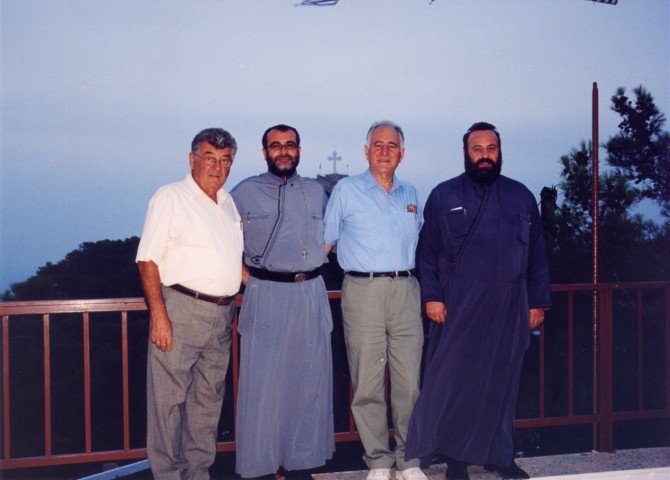
Μέσα στο τοπίο του μοναστηριού προστέθηκε και ο Σταυρός. Γύρω στο 1970, στον απέναντι λόφο με φόντο τη θάλασσα τοποθέτησαν ένα σιδερένιο σταυρό, προσφορά των αδελφών Νικήτα και Χατζηάννη Παχούντη. Το 2003, με δωρεά του Μανώλη Κασσώτη, κατασκευάστηκε μια παραδοσιακή πετρόσκαλα με 121 σκαλοπάτια που καταλήγει στην κορυφή του λόφου, σε ένα λιθόκτιστο αυλόγυρο. Μέσα στον αυλόγυρο, λόγω φθοράς του παλιού, στήθηκε ένας μεγαλύτερος ανοξείδωτος σταυρός, δωρεά του Παναγιώτη και Ευαγγελίας Σκευοφύλακα. Το καλοκαίρι, εκατοντάδες τουρίστες επισκέπτονται το μοναστήρι, ανεβαίνουν στην κορυφή του λόφου για να δουν τον Σταυρό και να απολαύσουν ένα μαγευτικό τοπίο που συνδυάζει απότομους γκρεμούς, το δάσος και τη θάλασσα. Την ημέρα και τη νύχτα που φωτίζεται ο Σταυρός φαίνεται από τα περαστικά πλοία και οι ψαράδες τον βάζουν για σημάδι.

Τα τελευταία χρόνια, έγιναν αρκετές επεκτάσεις και νέες εγκαταστάσεις στο μοναστήρι και η γιορτή και το πανηγύρι της Παναγίας πήραν καινούργια αίγλη. Χτίστηκαν μαγειρείο με αποθήκες και αποχωρητήρια και φτιάχτηκαν υδατοδεξαμενές, και έφτιαξαν 102 υπαίθρια πέτρινα τραπέζια για να κάθονται οι προσκυνητές την μέρα του πανηγυριού. Το 2005, με δωρεά του Αντώνη Χατζημιχάλη ανακαινίστηκε η σκάλα και η αυλή της Παναγίας από πέτρα Καρύστου.
Επίσης, διαπλατύνθηκε και ασφαλτοστρώθηκε ο δρόμος από τα Πηγάδια στο μοναστήρι και δημιουργήθηκε τεράστιο parking για την στάθμευση εκατοντάδων αυτοκινήτων. Για την επέκταση των εγκαταστάσεων η Φωτεινή Μαργαρίτη, η Καλλιόπη Αντ. Παπαδάκη, η Βενετία Βλαστού και τα τέκνα του Γεωργίου και της Ελένης Σαρρή δώρισαν τα κτήματα τους στην περιοχή του μοναστηριού. Το 2004 αποπερατώθηκε το Αρχονταρίκι, δωρεά του Παναγιώτη και Ευαγγελίας Σκευοφύλακα, απέριττο οίκημα που συμπληρώνει και στολίζει το οικοδομικό συγκρότημα του μοναστηριού. Σε μια άλλη άκρη της πλατείας κτίστηκε μια βρύση με την επιγραφή:
«Δροσιά από της Παναγιάς την αγιασμένη βρύση,
στις λυπημένες τις ψυχές, βάλσαμο να σκορπίσει».
Τα τελευταία χρόνια οι προετοιμασίες για το πανηγύρι της Λαρνιώτισσα διαρκούν δυο μήνες. Περισσότεροι από 50 άνδρες, γυναίκες, νέοι και νέες ακόμη και παιδιά εργάζονται αφιλοκερδώς, με όρεξη και μεράκι κι αυτές τις μέρες το μοναστήρι μοιάζει με μελίσσι. Η εκκλησία μέσα και έξω και όλος ο περίβολος καθαρίζεται και στολίζεται. Τα φαγητά, προσφορές ευλαβών προσκυνητών, προετοιμάζονται και μαγειρεύονται.

Ενωρίς την παραμονή καταφθάνουν οι προσκυνητές από Πηγάδια, Μενετές, Απέρι και Αρκάσα, γύρω στις 3.000 άτομα, πολλοί φέρνουν άρτους και άλλα τάματα. Κοντά στο σούρουπο αρχίζει κατανυκτικός εσπερινός, με αρτοκλασία και με την συμμετοχή του Μητροπολίτη. Η ομορφιά του περιβάλοντος κι η υποβλητικότητα του δειλινού, δημιουργούν ψυχική ανάταση, λες και επικοινωνείς με το Θείο.
Ακολουθεί το σερβίρισμα του φαγητού, που είναι φτιαγμένο από κατσικίσιο κρέας κοκκινιστό με πιλάφι και πατάτες, σαλάτα, Καρπάθικες σαρδέλες, ψωμί, νερό και κρασί. Μέσα σε δυο ώρες όλοι έχουν σερβιριστεί και αρχίζει ο χορός με παραδοσιακά όργανα. Γύρω στις δυο με τρεις το πρωί φεύγουν οι προσκυνητές. Καμμιά εκατοστή απ’ αυτούς επιστρέφουν τ’ άλλο πρωί, ανήμερα της γιορτής της Παναγίας, για να ακούσουν την Θεία Λειτουργία.
Επίσης κάθε Πέμπτη βράδυ γίνεται παράκληση, και μόλις τελειώσει οι προσκυνητές συγκεντρώνονται στο Αρχονταρίκι, όπου τους προσφέρεται καφές, γλυκά, φρούτα και αναψυκτικά. Πολλοί συμπατριώτες μας ταξιδεύουν χιλιάδες μίλια για να παρευρεθούν στην Χάρη Της, να κάνουν τους γάμους τους και να βαπτίσουν τα παιδιά τους.
Η Παναγία του «Μεγάλου Σκίνου» θερμαίνει την πίστη των ανθρώπων και κρατάει ζωντανές τις Καρπάθικες παραδόσεις του Βασιλή, της Μενεδιάτισσας και του γιού της.

Our Lady of Larniotissa
By Manolis Cassotis
Marian-covered are called the Aegean islands. No matter which island you visit, you will find churches and monasteries dedicated to Holy Mother. To Her a captain sings his prayer (in free translation):
“I don’t cry for the ship, nor for the freight,
I only cry for the sailors, whom I have chosen,
Holy Mother, help the sailors to reach land.”
In Karpathos, eight of the central churches of the eleven villages of Karpathos are dedicated to Holy Mother: Assumption (Menetes, Aperi, Pyles, Olympos), Birth (Volada, Mesochori), Annunciation (Pigadia), Spring of Life (Diafani). There are also dozens of chapels, whose oral tradition has preserved the unwritten history of Karpathos.
The Slave
Three or four centuries ago, pirates, during a raid on Karpathos, stole a seven-year-old boy, the only child of a woman from Menetes, and sold it in slave markets. The grieving mother placed her hopes in the Holy Mother, begging her to bring her child back, and for thirty years went every Saturday to Saint Sunday’s chapell to light the oil lamps.

One of these Saturdays, when she arrived at Saint Sunday and lit the oil lamps, she heard a female voice telling her to take the path and descend the cliff, where she has news for her child. As soon as she descended the cliff, she heard the voice again telling her to go to “Megalo Skino” (Very large bush). At the same time, Vasilis Manias happened to be passing by, who had also heard the same voice, and he met the woman who was looking for the spot indicated to her. Vasilis, who knew the area well, led her to “Megalo Skino” and there, while searching, they found the icon of the Holy Mother. Both were speechless before the miracle and before they could even recover from their emotion, an unknown sunburnt man appeared before them and asked which road led to Menetes.
When the pirates took the child, they sold it in a slave market, and when he grew up, they put him to work as a sailor on ships. The seven-year-old boy knew that he came from Karpathos and Menetes, and he kept in his childhood memory some images from his life on the island. Many times, when he passed through the Karpathian Sea and saw the mountains of Karpathos, his heartbeat fastem, he knew that his people lived somewhere there. After years, the ship was transporting timber to Egypt and passed closer to the land for its sails could catch the wind coming down from the mountains.
It was not dawn yet, when the sailor saw the mountains of Karpathos, closer than ever before. His heart was beating fast and his desire to go out onto the island grew. Then the apparition of a woman appeared, urging him to jump into the sea and swim to shore. But he was frightened because the ship was passing at a considerable distance from shore. Again, the apparition appeared and advised him to throw a piece of wood into the sea and with its help he would reach the shore. This time he did not hesitate, he jumped into the sea and, leaning on the piece of wood, he saw the ship slowly moving away.
It was already dawn when the ship disappeared into the sea behind the horizon, and the slave swimming arrived exhausted at the shore. He rested a little and for greater safety moved away towards the interior of the island to “Megalo Skino”, where he met the woman from Menetes and Vasilis Manias. When he asked about the road leading to Menetes, the woman replied that she was also going that way and if he wanted to follow her. But when they reached Vatha it was already dusk and the woman suggested that he spend the night in her stable and in the morning goes to Menetes.
Mother and Son
She cooked whatever was available on hand, and by the light of the lamp, mother and son had dinner. Before the stranger fell down on the sopha that the Menediatissa had spread, he saw the icon of the Holy Mother on the shelf, and something cleared up in his clouded mind. Out of instinct or some old habit, he made the sign of the cross and fell asleep.
But the woman could not sleep. The icon of the Holy Mother in the bush was spinning in her mind and the voice buzzing in her ears saying: “Come, I bring you news about your child.”With these thoughts, she went and sat down next to the sleeping stranger, unable to take her eyes off him. Her thoughts went back to her child, and she thought that if her son was alive, he would be the same age. Suddenly, like a flash, the thought crossed her mind that perhaps this unknown man was the son she had been waiting for and that the Holy Mother had brought him to her. But again, doubt flooded her heart: “The Holy Mother told me that she would bring me news about my son, but not my own child.”
Perhaps, she thought, the stranger had some news about her son, for he seemed to have come from distant lands. She felt the desire to wake him up and ask him, but when she saw how soundly he slept she pitied him. Thirty years had withered her youth waiting, for one more night she had to be patient. As soon as she finished this thought she started again from the beginning and tormented her mind, until the morning hours when she fell asleep.
So, she didn’t hear the morning crowing of the rooster that woke the stranger and found her sleeping at his feet. He got up carefully so as not to wake her, opened the door and went outside. His mind began to clarify again and out of instinct he went to the outdoor cabinet that was about twenty meters behind the stable. He turned around and went into the oven house that was next to the stable. When he was little, there they had a large bucket where they put water to water the animals and to wash themselves. Now he found the bucket empty, with the events of the previous day, the woman didn’t find the time to go and fetch water. The stranger took the bucket and out of instinct he went towards Vroutsa where, when he was little, he used to go with his mother to fetch water from a small spring.
Meanwhile, through the cracks in the door and the little window, daylight entered the stable and woke up the woman. She was frightened when she saw that the stranger was missing and for a moment, she thought that the “voice”, the icon of the Holy Mother, and the stranger were a dream. However, she came to her senses when she saw the bedding on which he had slept the night before and jumped up. She opened the door, went out into the yard, looked around, searching for the stranger.
It didn’t take long before she saw him coming back with the bucket full of water. As soon as he reached her and saw her agitation, he said to her: “The bucket was empty and I went to Vroutsa to bring water.” Before the stranger had even finished his conversation, the mother’s heart had understood: “My child!!!” he managed to say and fainted. The son took the mother in his arms and laid her on the bench. He washed her face with water, and the mother came to her senses. The Holy Mother performed her miracle!!!
The Chapel
As soon as the woman left with the stranger for Vatha, Vasilis placed the icon in the woolen bag that was hanging on the saddle and set off for Vargara. Vasilis went on foot because he considered it a sin to ride the donkey. He had heard many times from the priest who read the Gospel in the church, that Christ rode a donkey to Jerusalem, and he did not find it right to share such honor with the icon.
As soon as Vasilis entered his stable, he cleaned the icon with oil and wine, placed it on the iconostasis of the stable, next to the other icons, lit the lamp, made the sign of the cross and kissed it. His wife did the same and one by one his children, when they returned in the evening with the flock from grazing. The next day (when dawn broke) the icon had disappeared. Worried, Vasilis went to the “Megalo Skino” and found the icon there again. “The Holy Mother does not want to leave the “Megalo Skino”, I must build a chapell here to accommodate Her Grace,” he thought.
For Vasilis to build the chapell, he first had to cut down “Megalo Skino” and clear the place. The bush had grown so tall that it resembled a large tree. It was the largest on Patella’s peninsula and was known to the goats’ breeders of the area as the big bush. Tradition states that Vasilis took seven mules of wood from “Megalo Skino”. In less than a year Vasilis and his children built a small chapell that could accommodate the priest, Vasilis’ family and the few seasonal Patella’s residents, and placed the icon inside.
Celebration
Because the icon was found on September 8, the birthday of the Holy Mother, Vasilis decided to celebrate the chapell on this day. After all, it served him well because at that time his flock grazed in Patella. To officiate, he brought an Aperitan priest, who was also a farmer and lived in the area. Vasilis’ family and some neighbors gathered, and the woman from Menetes came with her son and his wife, soon after he arrived, he got married, and brought a wheat loaf and oil for the Holy Mother’s lamp. When the service was over, they sat together under a large pine trees and ate before setting off on their return journey.
The next year, when the service was over, everyone went to Vasilis’s stable, where he slaughtered a goat and cooked it with fresh ground wheat. They ate the goat, cheese and ground wheat, and drank wine that the woman from Menetes brought from her vineyard in Vatha. This continued in the following years and over time the chapel became more well known. Because there was a dry river nearby, Larniotis, the chapel was named Holy Mother Larniotissa or simply Larniotissa.
When the woman from Menetes died, her son with his wife and their children, and later their descendants, continued to honor Larniotissa’s feast, and over time a Menediatian tradition was created to honor her Grace every year. Vasilis also died and his descendants, who inherited the chapel, took care of its maintenance, and the feast of the Holy Mother. Over time, the lyre flutes and the dance were added, and Vargara echoed with mantinades for the miracle of the Holy Mother.
New Chapell
At least four generations passed from the time of Vasilis Manias until his descendant Vasilis Daskalakis inherited the animal herd, the stable and Larniotissa’s chapel. Vasilis the younger was born around 1860 and was also known as Vasilis Manias. Along with the chapel, Vasilis inherited the obligation to maintain it and the celebration.
Vasilis married Fotini Lambros and had a large family and left many descendants. Vasilis’s family was joined by his wife, and he needed a larger chapell to accommodate them. Around 1900, as soon as the feast ended, Vasilis demolished the small chapell and built a larger one in its place, the one that exists today. However, he did not have time to cover it because winter set in and he had to move his herd to Petronas.
In Petronas, Vasilis counted his goats and sheep and when he saw that some were missing, he sent his daughter Kyrania to Patella to search for them and bring them back. When Kyrania arrived near Larniotissa, she saw the apparition of a woman who told her: “Your father left me uncovered and I am getting wet.” When Kyrania returned to Petronas and told her father the incident, Vasilis immediately made the decision: “I must go and cover the Holy Mother.”
With the increase in relatives and other people from Pigadia and the growth of the church, the festival grew. In addition to Vasilis and his relatives, other pilgrims made processions and brought slaughtered animals, bread, oil, wine, fruit and other food for the feast of the Holy Mother. Those who were children in the 1920s recount: “Vargara was filled with people from Manias and Lampros families and other Pigadiotans.”
New era
The celebration stopped for two years, during World War II, when the area was declared war zone. After the war, when Father Gennadios Karadimitriou took over as parish priest, the festival began to grow. The celebration started on the eve with vespers, followed with songs and dancing in the courtyard.
The Cross was also added to the landscape of the monastery. Around 1970, on the opposite hill with the sea in the forground, an iron cross was placed, gift by the brothers Nikitas and Hatziannis Pahountis. In 2003, with donation from Manolis Cassotis, a traditional stone staircase with 121 steps was constructed that ends at the top of the hill, with a stone-built courtyard. Inside the courtyard, due to the deterioration of the old one, a larger stainless-steel cross was erected, donation by Panagiotis and Evangelia Skevophylakas. In the summer, hundreds of tourists visit the monastery, climb to the top of the hill to see the cross and enjoy a magical landscape that combines steep cliffs, the forest and the sea. During the day and night when the Cross is illuminated, it is visible from passing ships, and fishermen use it as lighthouse.
In recent years, several expansions and new facilities have been made at the chapell, and the feast and festival of the Holly Mother have taken on new glory. A kitchen with storage rooms, water reservoid and latrines was built, and 102 outdoor stone tables were made for pilgrims to sit on the day of the festival. In 2005, with a donation from Anhtony Hatzimichalis, the staircase and courtyard of the Holly Mother were renovated with Karystos stone.
Also, the road from Pigadia to the chapell was widened and paved and a huge parking lot created to accommodate hundreds of cars. For the expansion of the facilities, Fotini Margariti, Kalliopi Ant. Papadaki, Venetia Vlastou and the children of George and Eleni Sarris donated their lands around the chapell. In 2004, “Archontariki” was build, donation by Panagiotis and Evangelia Skevophylakas, a simple building that complements and adorns the chapell’s building complex. At the end of the square, a fountain was built with the inscription (in free translation):
“Dew from the holy fountain of the Holy Mother,
to spread balm to suffering souls.”
In recent years, preparations for Larniotissa’s festival last two months. More than 50 men, women, young men and women, and even children, work selflessly, with enthusiasm and passion; these days the monastery resembles a beehive. The church inside and out and the entire grounds are cleaned and decorated. The food, offerings from devout pilgrims, is prepared and cooked.
Early on the eve, pilgrims from Pigadia, Menetes, Aperi and Arkasa arrive, around 3,000, many bringing bread and other offerings. Near dusk, a devout vespers begins, with bread offerings and with the participation of the Metropolitan. The beauty of the surroundings and the evocativeness of twilight create a mental uplift, as if you are communicating with Divine.
This is followed by serving food made from braised goat meat with pilaf and potatoes, salad, Karpathian sardines, bread, water and wine. Within two hours everyone has been served and the dancing with traditional instruments begins. Around two or three in the morning the pilgrims leave. A hundred of them return the next morning, on the feast day of the Holy Mother, to attend the divine liturgy.
Also, every Thursday evening, a prayer service is held, and once it is over, the pilgrims gather at “Archontariki”, where they are offered coffee, sweets, fruit and refreshments. Many compatriots travel thousands of miles to attend Her Grace, to have their weddings and to baptize their children.
The Holy Mother of “Megalo Skino” warms the faith of the people and keeps alive the Karpathian traditions of Vasilis, the woman from Menetes and her son.
www.anamniseis.net
2.9.2026
Καρπαθιακά Νέα